Brochure
 Info Session
 Application
 Alumni Voices


Stakeholder Roundtable: Women’s Leadership Toward Green Transformation (June 3rd)
We are pleased to announce an upcoming online Stakeholder Roundtable focused on one of the most urgent and important themes in global sustainability today: strengthening women’s leadership in green transformation.

As countries around the world accelerate their commitments toward net-zero targets and sustainable development, the need for inclusive leadership has never been more critical. Yet, women remain underrepresented in key areas such as climate governance, energy systems, and sustainability leadership. This roundtable aims to address this gap by bringing together voices from academia and practice in Japan and India.
Hosted jointly by NUCB Business School and the Centre for Social Sensitivity and Action (CSSA) at the Goa Institute of Management, this session will serve as a platform to share early research insights, exchange perspectives, and explore future pathways for both research and action.
Event Details
Title: Stakeholder Roundtable – Women’s Leadership towards Green Transformation: Pathways Forward
Date: 03 June 2026
Time: 3:00–4:00 pm (Japan Time) / 11:30 am–12:30 pm (India Time)
Join Zoom Meeting:
Zoom Meeting Link
Meeting ID: 832 9598 7141
Passcode: 2026G
Agenda Highlights
The session will include contributions from researchers and practitioners working across Japan and India:
Welcome remarks and context setting – Dr. Rebecca Chunghee Kim
Preliminary research insights – Dr. Divya Singhal
Practitioner perspective – Ms. Setsu Suzuki (FemUniti)
Research insights – Dr. Ananya Chakraborty (WRI India)
Academic reflections – Dr. Yoko Nishide
Commentary – Dr. Michiko Tsuge (Hitotsubashi University)
Open discussion
Closing remarks and vote of thanks
About the Roundtable
This discussion brings together stakeholders committed to advancing inclusive leadership in sustainability transitions. Beyond sharing research findings, the roundtable aims to foster dialogue across sectors and regions, and to co-create ideas that can inform both academic inquiry and real-world impact.
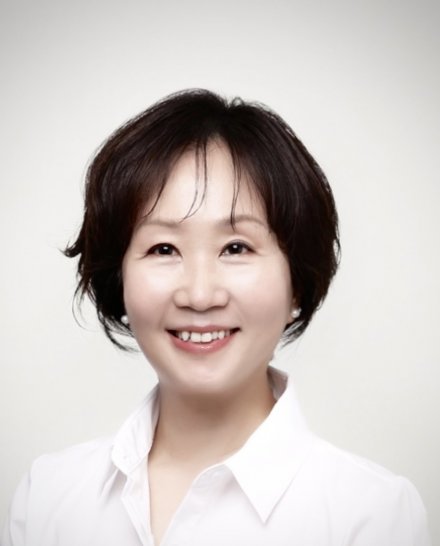
Rebecca Chunghee Kim | Faculty | NUCB Business School - MBA Japan
NUCB Business School - MBA Japan
https://mba.nucba.ac.jp/en/faculty/rebecca_chunghee_kim.html